I
First Hour
The coming of Christ, the true Light. The Church gives thanks for the light received and asks to pass through the day without sin.
Understanding the clock
Learn how the Byzantine clock follows local sunset, why seasonal hours change length, and how they differ from civil time.
Byzantine.live does not replace civil time. It makes another reading visible: seasonal hours, liturgical reference points, and the solar rhythm that once ordered life and prayer.
See live Byzantine time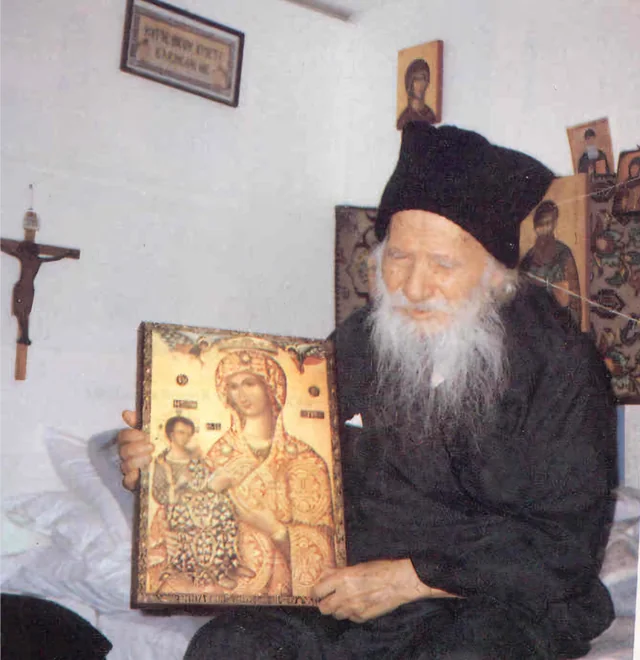
Why this clock?
This site is a tribute to Saint Porphyrios of Kavsokalyvia.
Byzantine.live sets the sun, the tradition of counting, and the place’s time zone side by side. It is a simple calculation aid, not an official Athonite or ecclesiastical clock.
01
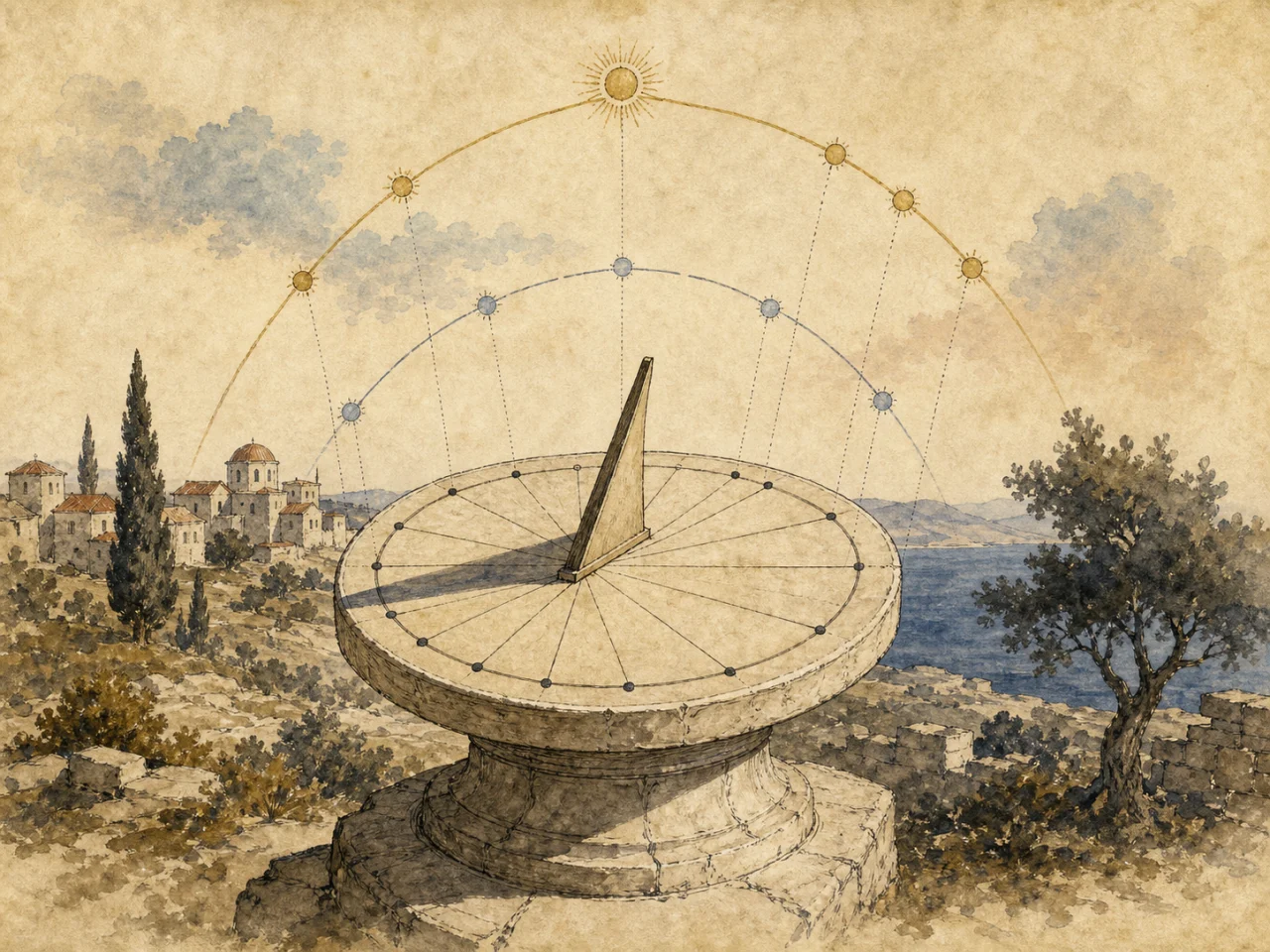
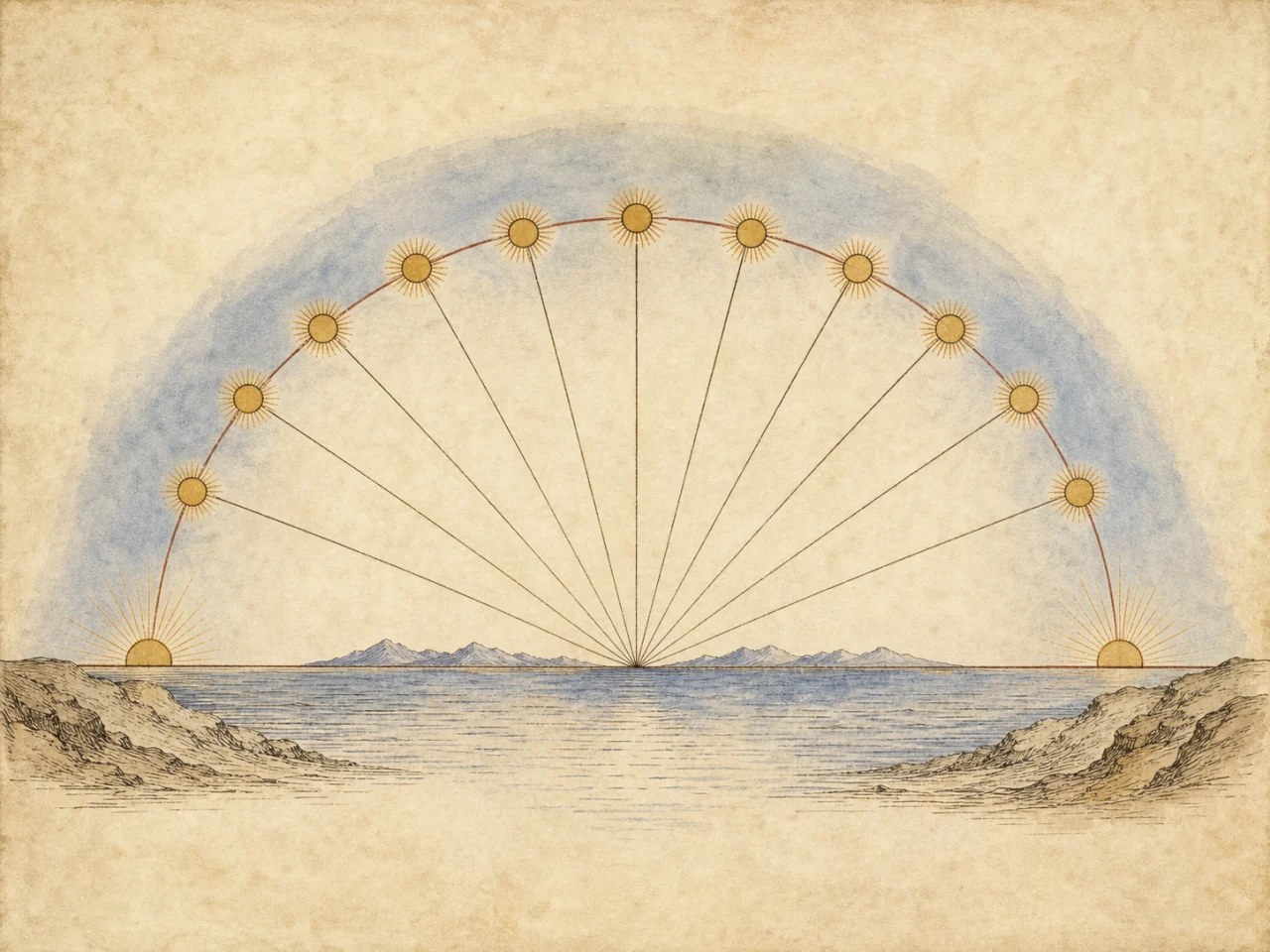
In the ancient system of seasonal hours, the time between sunrise and sunset is divided into twelve equal parts. The night is divided into twelve as well.
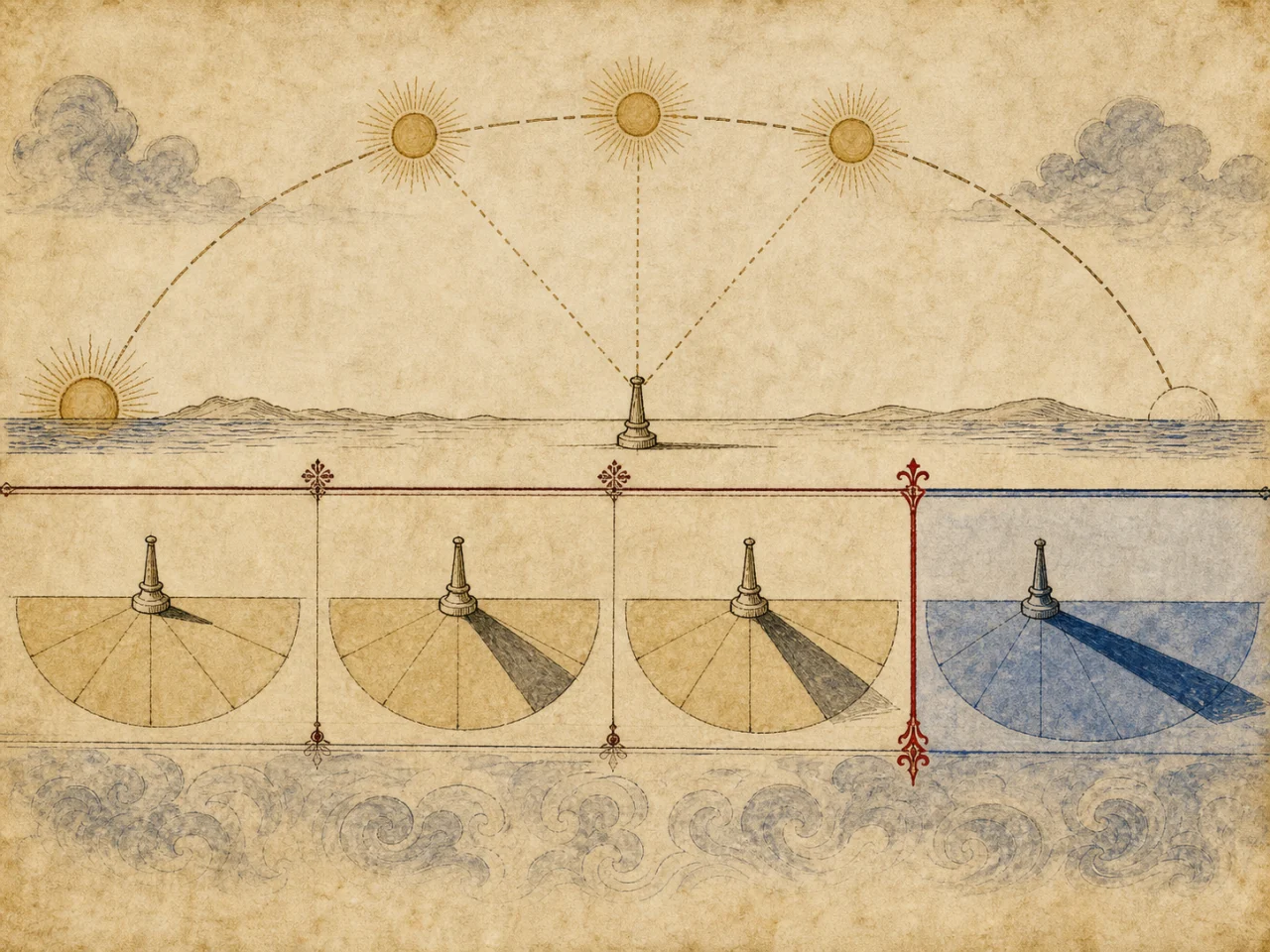
The number stays constant, but the length changes. In summer, the hours of daylight grow longer and the hours of night grow shorter. In winter, the opposite is true.
A seasonal hour is not a badly adjusted civil hour. It is another definition of an hour.
Summer day15 h ÷ 12 = 75 min
Summer night9 h ÷ 12 = 45 min
02
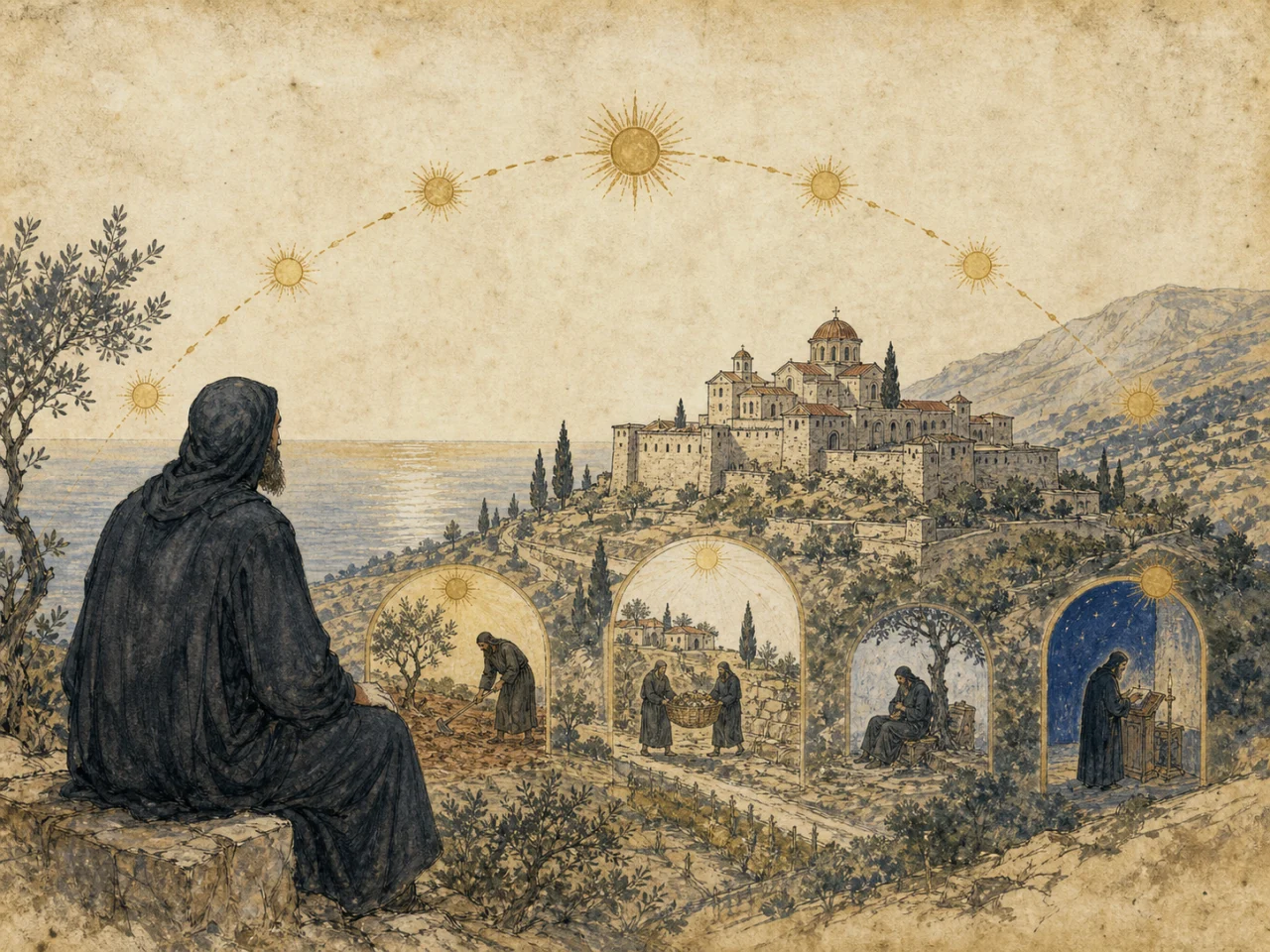
For the ancients, the sun was the great visible indicator of time. Its course ordered work, meals, rest, and prayer.
This way of counting asked not only “how much time has passed?”, but also: where are we in the day?
The Sixth Hour marked the middle of the bright day. The Ninth said that the sun had begun to descend. The hour placed the human being within a landscape of light.
03
The model uses the previous sunset S₀, the next sunrise R and the next sunset S₁.
S₀ < R < S₁
HN = (R − S₀) / 12
HD = (S₁ − R) / 12
N(k) = S₀ + (k / 12) × (R − S₀)
D(k) = R + (k / 12) × (S₁ − R)
Each boundary is calculated directly from the two ends of the interval. This avoids adding twelve rounded durations and accumulating a drift.
D(0)06:00
D(3)09:00
D(6)12:00
D(9)15:00
D(12)18:00
04
The third daylight hour is the third interval after sunrise: [D(2), D(3))
It can be read step by step: the first hour begins at sunrise. After one complete hour comes the second; after two hours, the third; after three complete hours, at D(3), the fourth therefore begins.
In other words, the interval called the “third hour” runs from D(2) to D(3). But the office of the Third Hour is traditionally associated with about 09:00: Byzantine.live therefore places its liturgical reference point at D(3).
The current interface shows “Byzantine hour 4”. The form “Day · IV:00” is a teaching notation in this essay, not a label displayed as such.
Third Hour reference point: reached at D(3).
Current seasonal interval: fourth hour.
Third Hour = D(3) names the reference point, not the beginning of the third interval.
05
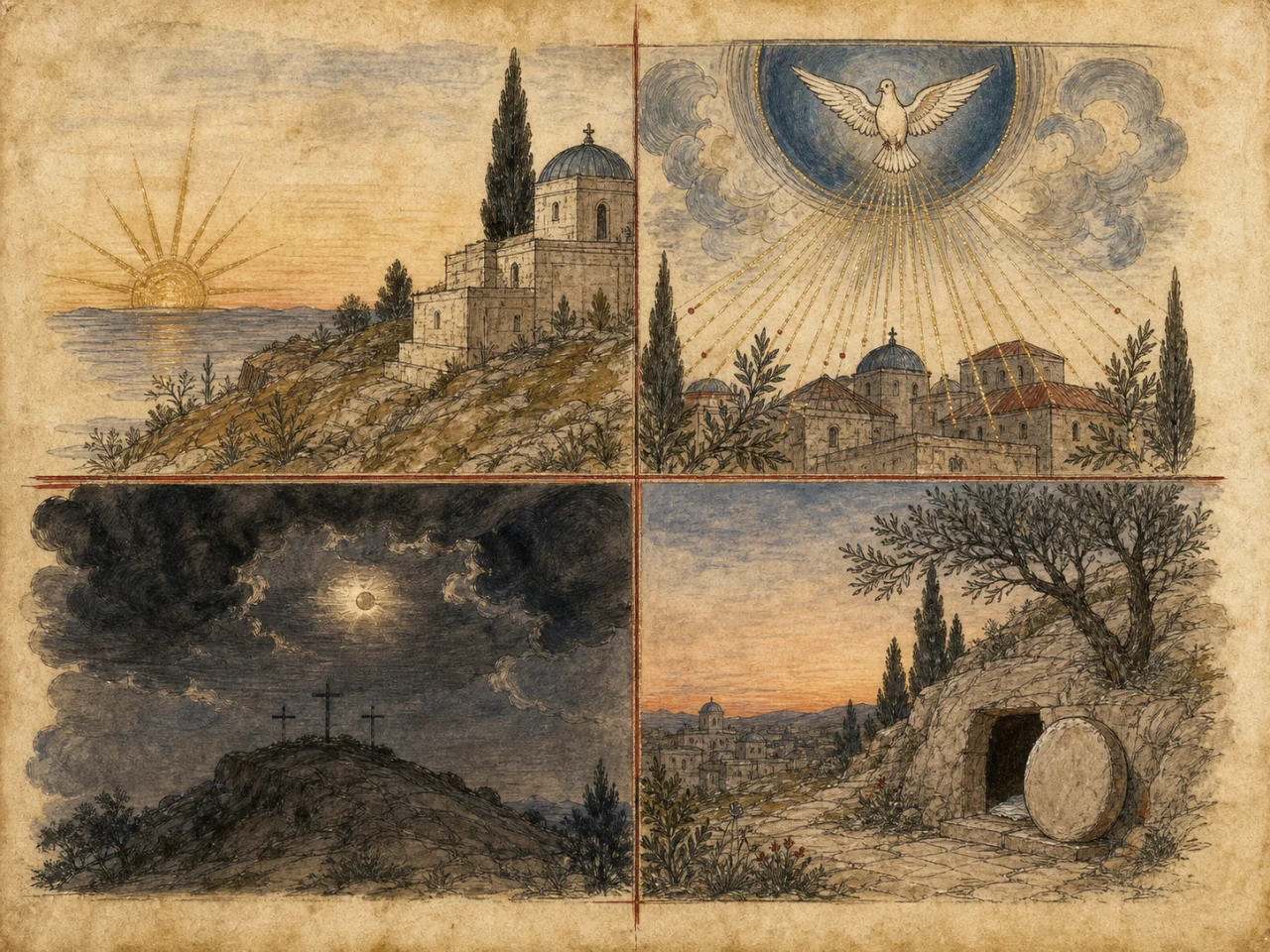
The four principal Hours are more than simple reference points. Each carries a memory of Christ and an inner disposition for that moment of the day.
I
The coming of Christ, the true Light. The Church gives thanks for the light received and asks to pass through the day without sin.
III
The descent of the Holy Spirit at Pentecost. It also recalls Christ’s judgment, insults, and scourging.
VI
The Crucifixion. At the heart of the day, prayer contemplates Christ lifted upon the Cross and darkness covering the earth.
IX
The death of the Lord and the waiting at the tomb. In Acts, it is also a traditional hour of prayer.
These themes give spiritual meaning to moments of the day. By themselves, they do not set a community’s actual schedule.
06
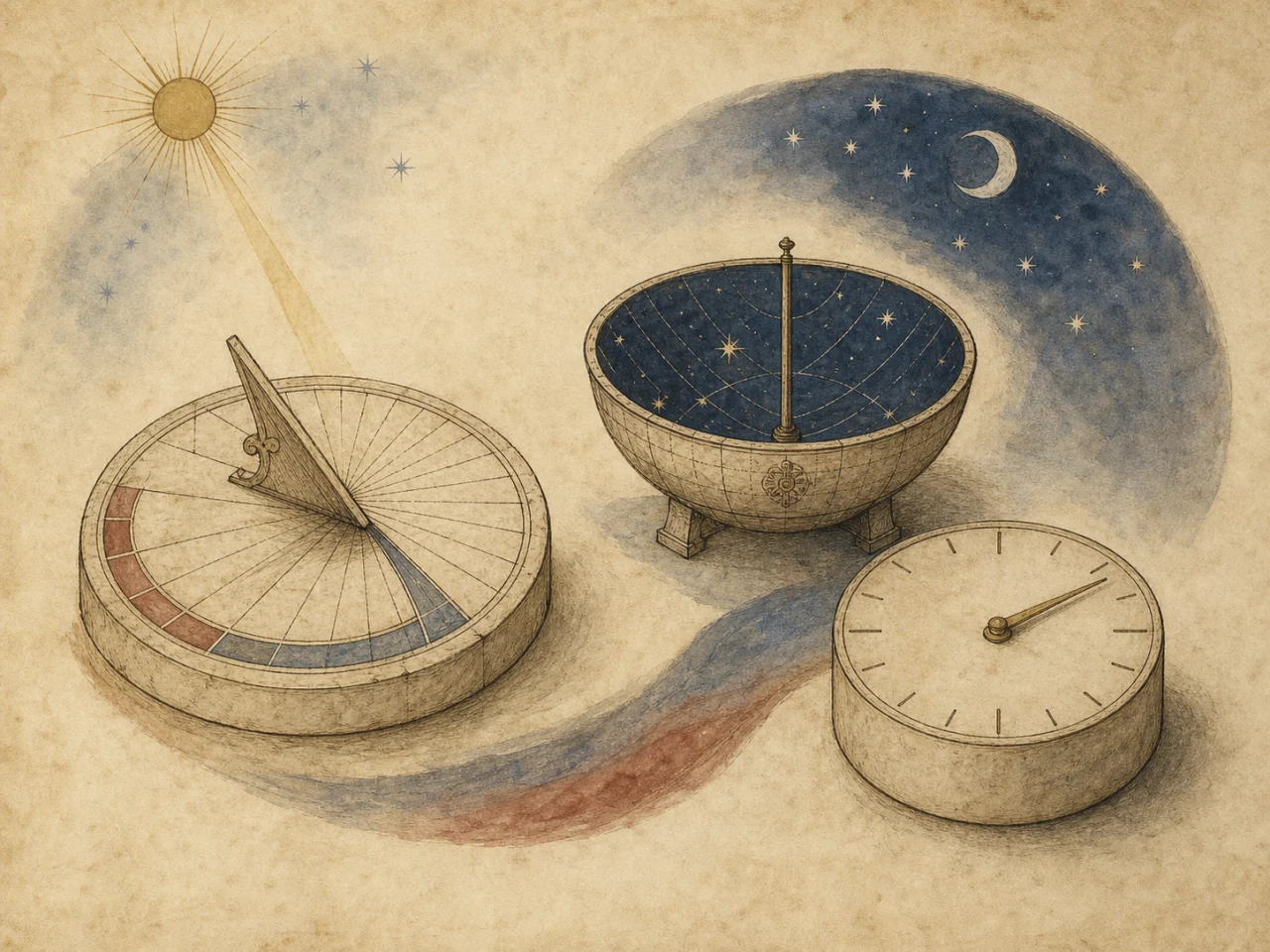
The three readings offered by Byzantine.live are not competitors. They answer three different questions: our place in the light, equal time elapsed since sunset, and the shared time of the time zone.
Sunset marks the start of the new day in sunset-based Byzantine time. The equal-hour reading counts ordinary 60-minute hours from sunset; the seasonal reading divides daylight and darkness into twelve hours each. These are different ways of counting, not interchangeable conversions. Choose your location on the live clock: the same civil time can correspond to a different Byzantine hour elsewhere.
07
A clock devoted to ancient time must also know its limits.
Matins, Vespers, Compline, and the Midnight Office depend on real communities and traditions. A solar reference point does not automatically become an operating schedule.
D(6) is the mathematical midpoint between the chosen sunrise and sunset. Astronomical solar noon is the sun’s passage across the meridian.
Terrain and atmosphere can shift the observed sunrise. When a sunrise or sunset is missing, Byzantine.live prefers to declare seasonal time unavailable rather than invent precision.
A clearly explained absence is better than invented accuracy.